Military doctor · Ukraine

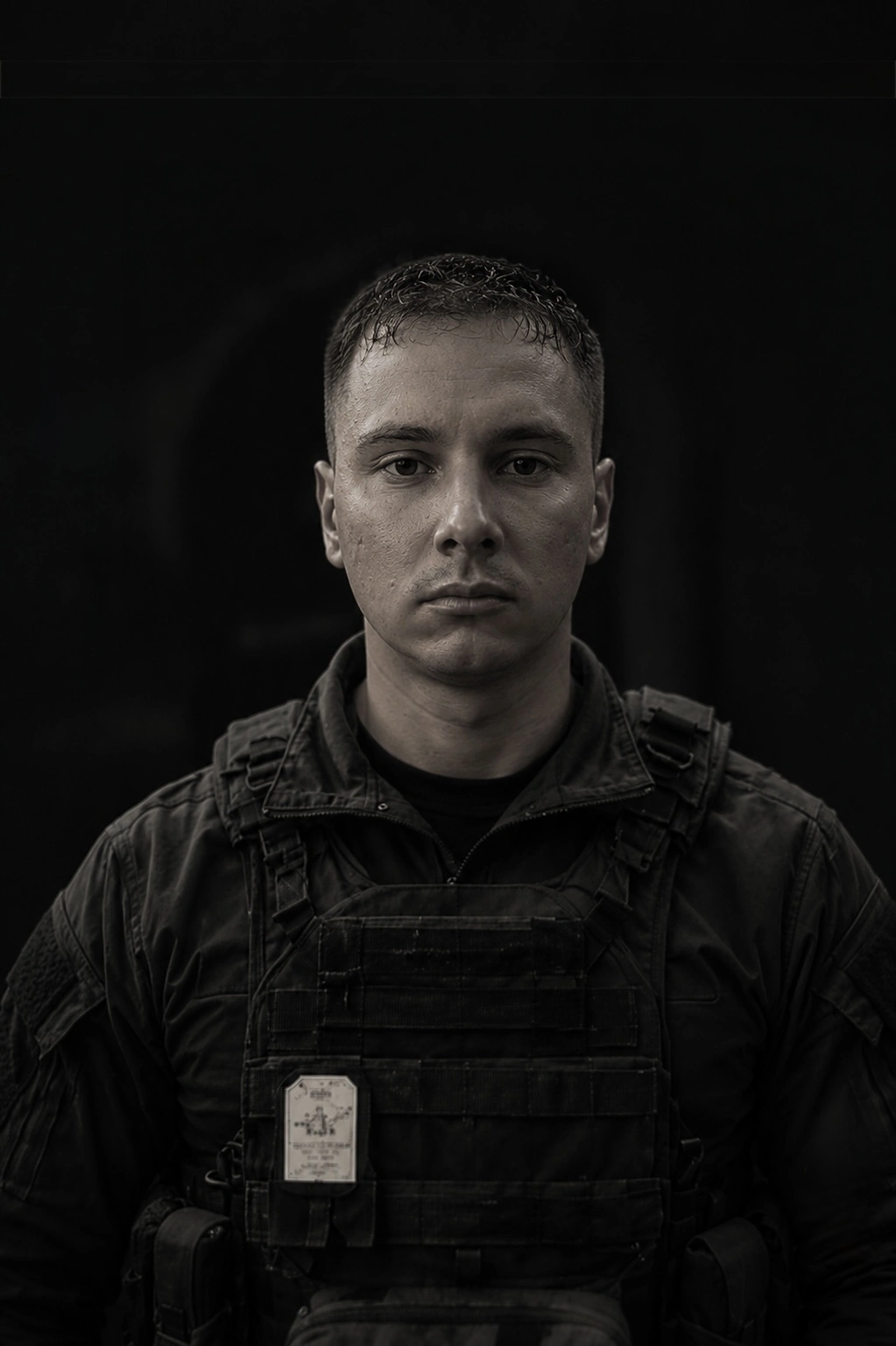
Serhii Pelishenko

Military doctor Tactical medicine · Education · Digital projects

Practical medicine, training people, and digital educational projects for work in challenging conditions.

5+ years of service
Training practical training
Digitalization educational projects
Serhii Pelishenko — military doctor and TCCC/CLS instructor
Continue
UA / EN
Tactical medicine · medical education · digital tools

Medicine, training, and digital tools — moving in one direction.

I am a physician by education and work in a military environment, where medicine often requires not only knowledge, but also clear decisions, practical thinking, and the ability to explain complex things in simple language. My focus is military medicine, TCCC protocols, preparing people to act in challenging conditions, and creating educational materials that help make casualty care algorithms easier to understand. This website is my personal professional space. Here, I collect my own projects, training materials, publications, and digital experiments at the intersection of medicine, education, and technology.

Practical experience, training, and digital tools — helping complex things become easier to understand.
Current focus
  • Military medicine — working in real-world conditions.
  • TCCC/CLS — training, algorithms, and practical skills.
  • Educational materials — explaining complex things in simple language.
  • Digital projects — websites, bots, and learning tools.
Military medicine
TCCC/CLS/CMC/PFC
Education
GitHub Pages
Digital tools

At the intersection of medicine, education, and technology

Hi, I’m Serhii. My professional foundation is medicine, the military environment, and practical training. I work with topics where knowledge should not only be theoretically correct, but also clear, structured, and ready to use in real conditions.

I’m interested in military medicine, TCCC/CLS, trauma care, evacuation, information handover, clinical thinking, and preparing people for situations where decisions need to be made quickly, calmly, and responsibly. In this field, it is important not only to know the algorithm, but also to understand how it works, when to apply it, and how not to lose the logic of action under pressure.

That is why, for me, training is not just about transferring information. It is a way to make complex things understandable: to break a topic down into clear steps, explain cause-and-effect connections, show the practical meaning of each action, and help people act with more confidence when there is almost no time for hesitation.

A separate direction of my development is digital tools. I use web pages, Telegram bots, visual materials, and simple interactive solutions as a way to make medical education more accessible, logical, and closer to real practice. For me, HTML, CSS, JavaScript, and GitHub Pages are not just technical skills, but tools for creating useful educational products.

I feel close to an approach where medicine, education, and technology do not exist separately. They can strengthen one another: medical experience provides the content, education helps present it properly, and digital tools make the material convenient, visual, and accessible to a wider audience.

This website is my personal professional space. Here, I collect my projects, educational materials, publications, and digital experiments at the intersection of medicine, education, and technology. It is not just a portfolio of my first web pages, but a place where my direction is gradually taking shape: practical medical education, tactical medicine, and digital tools for explaining complex things in simple words.

Why I do this

I’m interested in digital tools not for their own sake, but as a way to make knowledge more accessible. A web page, a bot, or an interactive material can turn a complex topic into a clear sequence of actions: what is happening, why it matters, and what decision should be made next.

In medicine, especially when time is limited and stress is high, the way information is presented matters a lot. Well-structured material can help a person orient themselves faster, remember an algorithm better, and act with more confidence in a real situation.

This personal website is my starting point, from which something bigger can grow.

My working directions

Right now, I am developing my own space at the intersection of medical education, tactical medicine, and digital tools:

Responsive layout Flexbox / Grid Basic JavaScript Military medicine TCCC / CLS Trauma care Medical education Digital learning tools Web projects
PORTFOLIO

Projects and
digital solutions

A selection of my projects — from practical tools and educational resources to thematic websites and bots.

🗂 All projects
TELEGRAM BOT

Telegram bot for
learning Spanish

An educational Telegram bot for practicing Spanish at A1, A2, and B1 levels, with vocabulary sets, interactive quizzes, exercises, cultural materials, and a premium area.

Python aiogram SQLite OpenAI API
View project
TELEGRAM BOT

Telegram bot for learning Spanish

An educational Telegram bot created for regular Spanish practice in a convenient messenger format. The project combines vocabulary sets, exercises, quizzes, cultural content, and personalized learning by difficulty level.

The bot’s content is divided into A1, A2, and B1 levels. Users can work with vocabulary sets, take word knowledge quizzes, open interactive test sections, view images of famous places in Spain with Spanish captions, and read short poems for deeper language immersion.

🎯 Project goal

To create a convenient learning tool in Telegram that helps users practice Spanish regularly, gradually move between difficulty levels, and learn not only vocabulary, but also the cultural context of the language.

☷ What was done

  • Created the basic logic of a Telegram bot for learning Spanish.
  • Implemented content separation by A1, A2, and B1 levels.
  • Added vocabulary sets for different user proficiency levels.
  • Created interactive quizzes to test word knowledge.
  • Added learning cards with famous places in Spain and Spanish captions.
  • Included a section with poems in Spanish.
  • Implemented a premium area with additional learning content.
  • Laid the foundation for further expansion of the bot’s features.

⌘ Technologies

Python aiogram SQLite OpenAI API Telegram Bot API

♡ Why it’s interesting

The project combines language learning, automation, and elements of cultural immersion. Users do not simply repeat words — they interact with level-based content: take quizzes, unlock new materials, and see examples of Spanish through places, texts, and short learning blocks.

Project type Telegram bot
Date 2025–2026
Role Logic, structure, development
ARCHIVED PROJECT

World of Dune — a page
about the Bene Gesserit

My first large learning web project, created as a fan page based on the Dune universe. In this project, I first practiced building a website structure, navigation, thematic content, visual atmosphere, and simple interactivity.

HTML CSS JavaScript
View project
ARCHIVED PROJECT

World of Dune — a page about the Bene Gesserit

This is my first large learning web project, created as a fan page based on Frank Herbert’s Dune universe. The project was not intended to be a modern commercial website — for me, it was a starting point in learning HTML, CSS, JavaScript, page structure, and working with visual atmosphere.

In this project, I first tried to bring several types of content together on one page: text blocks, navigation, thematic sections, interesting facts, images, quotes, and simple interactive elements. The website is kept as an archived example of my early learning stage.

🎯 Project goal

To practice basic HTML/CSS layout, page structure, navigation, thematic content, images, and my first interactive elements in JavaScript.

☷ What was done

  • Created a thematic fan page inspired by the Dune universe.
  • Added navigation between the main sections of the page.
  • Collected text content about the Bene Gesserit, their role, influence, and mythology.
  • Created a section with interesting facts presented as separate cards.
  • Added a block with images, captions, and visual accents.
  • Used a basic HTML structure and CSS styling.
  • Added my first decorative and interactive elements.
  • Kept the project as an archive of my starting point in learning.

⌘ Technologies

HTML CSS JavaScript GitHub Pages

♡ Why it matters

This project matters not because of how modern the design is, but because of the role it played in my learning. It shows the moment when I first started bringing text, style, structure, and atmosphere together into a single web page. These experiments were the beginning of my understanding of layout, composition, and working with content.

Project type Learning page
Status Early-stage archive
Role Layout, structure, style
IN DEVELOPMENT

Educational hub
TCCC / MARCH

A future digital space for learning tactical medicine: the MARCH algorithm, bleeding control, airway management, evacuation, equipment, scenarios, and short reference materials for quick review.

TCCC MARCH Trauma care Medical education
Suggest a topic
ROADMAP

TCCC / MARCH learning hub

The idea behind this direction is to create a structured digital space for learning tactical medicine. The project is intended to combine my practical medical experience, my instructional work with TCCC/CLS, and my frontend development skills into one educational product.

The hub is designed as a place where complex topics can be explained in simple language: through action algorithms, short reference guides, visual schemes, training scenarios, checklists, and practical examples. The main focus is MARCH, massive bleeding control, airway management, evacuation, information handover, equipment, and review of key skills.

🎯 Goal

To create a convenient educational resource that helps users quickly review key TCCC / MARCH topics, better understand the logic of actions in tactical medicine, and make learning materials more accessible for students, instructors, and medics.

☷ What is planned

  • Separate pages for breaking down the MARCH algorithm.
  • Short reference guides on bleeding control, airway management, evacuation, and information handover.
  • Visual schemes, checklists, and action algorithms for quick review.
  • Training scenarios for self-assessment and group work.
  • Materials for instructors and students.
  • Sections on equipment, common mistakes, and practical solutions in field conditions.
  • The ability to gradually expand the hub with new topics, articles, and interactive blocks.

⌘ Format

TCCC MARCH CLS Algorithms Checklists Medical education

♡ Why it matters

In tactical medicine, it is not only knowledge itself that matters, but also the ability to quickly recall the correct sequence of actions. Well-structured digital material can help people understand algorithms better, review critical topics, and reduce chaos in the learning process.

This project is also important to me because it brings together two directions I am currently developing: medicine and frontend. It is an attempt to turn practical experience into a clear learning tool.

⊕ Get involved

Suggest a topic
Type Educational hub
Status Roadmap
Focus TCCC / MARCH